Loading…
 🛠 Ausbildung
Elektroniker Ausbildung: Salary, Skills & Career Path
By the GoGermany Editorial Team · 2026-07-23
Discover everything about Elektroniker Ausbildung in Germany: specializations, monthly training pay, IHK exam tips, and top career paths including Meister.
Why the Elektroniker Ausbildung Is One of Germany's Smartest Career Moves
Germany's energy transition, smart-home revolution, and industrial automation boom have turned qualified electricians into some of the most sought-after tradespeople in the country. The Elektroniker Ausbildung prepares you for exactly that demand — a structured, dual-system apprenticeship that combines hands-on workshop training with classroom theory at a Berufsschule. Whether you're coming from Morocco, Tunisia, Egypt, or anywhere else outside the EU, understanding every layer of this Ausbildung — the specializations, the pay, the IHK exams, and the routes afterward — will help you commit to the right path from day one.
What Is the Elektroniker Ausbildung?
The Elektroniker Ausbildung is a state-recognized dual apprenticeship (anerkannter Ausbildungsberuf) regulated under the Berufsbildungsgesetz (BBiG) and the Handwerksordnung (HwO). Training lasts 3 to 3.5 years depending on the specialization and your employer. You split your time between:
- Your training company (3–4 days per week): wiring systems, fault diagnosis, installing control units, reading circuit diagrams
- Berufsschule (1–2 days per week): mathematics, physics, electrical engineering theory, technical documentation
At the end you sit the IHK or HWK Abschlussprüfung (final exam), after which you hold the title Elektroniker/in — recognized across all 16 German Bundesländer and highly portable within the EU.
If you're still figuring out whether this Ausbildung fits your background and visa situation, the free Eligibility Checker can map your personal profile to the most suitable training path in Germany.
The Six Fachrichtungen: Choosing Your Specialization
This is where the Elektroniker Ausbildung differs most from many other trades — it splits into six official Fachrichtungen (specializations), each with a distinct job market and skill set.
1. Energie- und Gebäudetechnik (Energy & Building Technology)
The most common route. You install, maintain, and troubleshoot electrical systems in residential buildings, commercial properties, and public infrastructure. High demand in cities like Munich, Frankfurt, and Hamburg, where renovation of old building stock is legally required under the Gebäudeenergiegesetz (GEG). Employers include large construction firms like Züblin, regional Handwerksbetriebe, and municipal utilities (Stadtwerke).
2. Automatisierungstechnik (Automation Technology)
You program and maintain industrial control systems, PLCs (programmable logic controllers), and sensor networks on factory floors. Volkswagen, Siemens, and Bosch all recruit Azubis in this Fachrichtung. Duration: 3.5 years.
3. Betriebstechnik (Operational Technology)
Focused on maintaining electrical equipment inside production plants — motors, transformers, switchgear. Common in the chemical and steel industries in the Ruhr region (Duisburg, Dortmund).
4. Geräte und Systeme (Devices & Systems)
Manufacturing, testing, and repairing electronic devices — from medical equipment to aerospace components. Strong employer presence in Baden-Württemberg and Bavaria.
5. Informations- und Systemtechnik (Information & Systems Technology)
Installing and commissioning complex IT-driven electrical systems, network hardware, and communication infrastructure. Bridges traditional electrical work with IT — useful if you're considering a later pivot toward the Fachinformatiker Ausbildung track.
6. Maschinen- und Antriebstechnik (Machines & Drive Technology)
Electric motors, drive systems, and power electronics — especially relevant for the e-mobility sector. Growing fast as German car manufacturers electrify their production lines.
Tip: Check which Fachrichtung has the most open Ausbildungsplätze in your target city using the Bundesagentur für Arbeit's JOBBÖRSE (arbeitsagentur.de) — filter by Elektroniker + your city.
Elektroniker Ausbildung Salary: What You Earn Each Month
German law guarantees a Mindestausbildungsvergütung (minimum training allowance). From 2025 onward, the federal minimums are:
| Training Year | Federal Minimum | Typical Range (IHK/Tariff) |
|---|---|---|
| Year 1 | €682/month | €750–€950/month |
| Year 2 | €724/month | €800–€1,050/month |
| Year 3 | €766/month | €880–€1,150/month |
| Year 3.5 (if applicable) | €800/month | €950–€1,200/month |
Companies bound by Tarifverträge (collective agreements) — such as those in the IG Metall or ZVEH (Zentralverband der Deutschen Elektro- und Informationstechnischen Handwerke) pay scale — land consistently in the upper range. Companies in Munich or Frankfurt often top €1,100 in year three.
After completing your Ausbildung, starting salaries for a qualified Elektroniker-Geselle typically run from €2,500 to €3,400 gross per month, rising quickly with overtime and specialization. Use the free Brutto-Netto Calculator to see what that means as take-home pay after German taxes and social contributions.
For a broader picture of how Elektroniker pay compares to other trades, see our detailed guide on Ausbildung Salary in Germany: What Apprentices Really Earn (2026).
Core Skills You Build During the Elektroniker Ausbildung
Beyond screwdrivers and cables, employers expect a layered skill set by the time you graduate:
Technical hard skills:
- Reading and drawing circuit diagrams (Schaltpläne) and wiring layouts
- Installing low-voltage and high-voltage systems safely to VDE (Verband der Elektrotechnik) norms
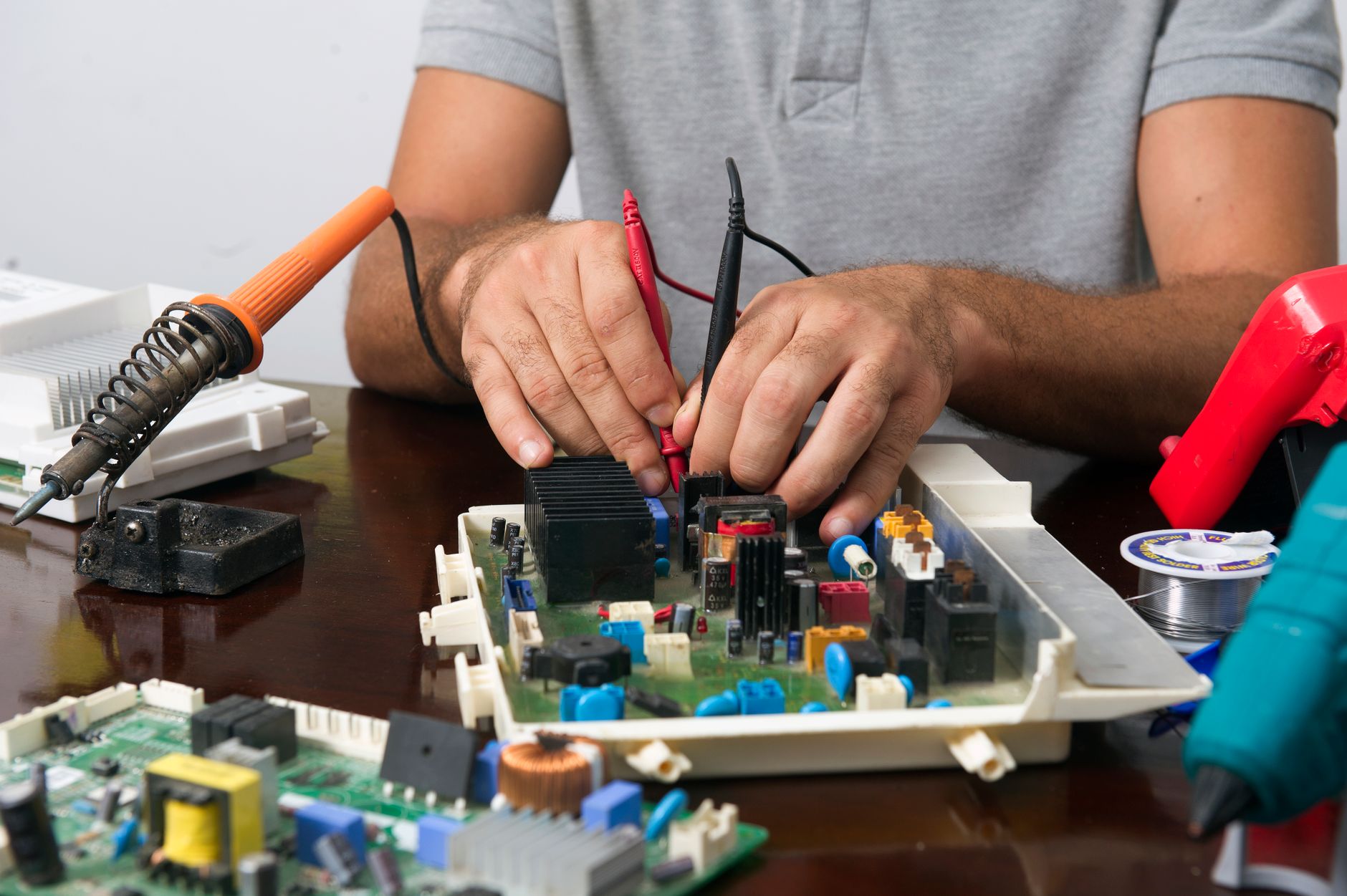
- Fault diagnosis with measuring instruments (multimeters, oscilloscopes)
- Programming basic PLC logic (Step 7 / TIA Portal for Siemens systems)
- Testing for compliance with DIN EN standards
- Energy efficiency calculations under current German building law
Soft skills that German trainers specifically assess:
- Precise technical documentation (Dokumentation)
- Independent problem-solving under time pressure
- Team coordination on construction sites
- Customer communication when working in private homes
German language at B2 level is the practical minimum; B2-C1 is strongly recommended, especially for the Berufsschule coursework where exam questions and technical manuals are entirely in German.
IHK and HWK Exams: Structure and How to Pass
The examination path depends on your employer's registration:
- HWK (Handwerkskammer) route: applies mainly to small electrical firms (Handwerksbetriebe). Final exam is called the Gesellenprüfung and has two parts.
- IHK (Industrie- und Handelskammer) route: applies to industrial employers. Final exam is the Abschlussprüfung in two parts (AP1 and AP2).
The Two-Part Exam Structure (IHK)
AP1 – Intermediate Assessment (taken roughly halfway through training, around month 18):
- Written tests on electrical engineering theory
- Practical exercise: assembling and testing a specific circuit
- Result counts toward ~40% of the final grade
AP2 – Final Assessment (at the end of training):
- Written exam: 4 subject areas including systems technology, business studies, and your Fachrichtung-specific content
- Practical exam: a real-world task lasting 6–8 hours, assessed by an IHK examination committee
- Oral questioning if your written/practical scores are borderline
Exam Preparation Tips
- Practice with past exam papers (Prüfungsarchiv) available free at your local IHK — for example, IHK München, IHK Berlin, or IHK Frankfurt all publish multiple years' worth online
- Work through the U-Form Verlag and Europa-Lehrmittel textbooks widely used in German Berufsschulen
- Form study groups with fellow Azubis — peer teaching is consistently cited as the most effective revision method by successful Elektroniker graduates
- For a deeper breakdown of exam strategy, read IHK Final Exam: How to Prepare and Pass Your Ausbildung Certification in Germany
Career Paths After Your Elektroniker Ausbildung
Finishing your Ausbildung is not a ceiling — it's a launchpad with multiple upward routes.
Meister (Elektrotechnikermeister)
The Meisterbrief is the gold standard in the German trades. After 2–3 years of professional experience you can enroll in a Meisterschule — roughly 12–18 months part-time or 6–9 months full-time. The Meisterprüfung is administered by the relevant HWK (e.g., HWK München, HWK Hamburg). With a Meister title you can:
- Open your own Elektrobetrieb
- Train your own Azubis
- Apply for the KfW Meistergründungsprämie (start-up grant up to €10,000)
- Enroll at a Fachhochschule without an Abitur under the DQR level-6 equivalency rule
Meister salaries range from €3,800 to €5,500 gross/month in employed positions, higher if self-employed.
Techniker (staatlich geprüfter Elektrotechniker)
A Technikerschule (e.g., Fachschule für Elektrotechnik) offers a 2-year program leading to the staatlich geprüfter Techniker title. This is particularly strong in automation and industrial sectors and often leads to engineering-adjacent roles.
Duales Studium / University Path
With your Ausbildungsabschluss and employer support you can pivot into a Duales Studium in Electrical Engineering, Mechatronics, or Energy Technology. Universities of Applied Sciences (Hochschulen) across Germany — TH Köln, Hochschule München, HTWK Leipzig — actively recruit qualified tradespeople into accelerated degree programs.
Specialization and Upskilling
Many Elektroniker-Gesellen pursue certificates in:
- Photovoltaik-Installateur (solar panel installation)
- Ladeinfrastruktur für Elektrofahrzeuge (EV charging infrastructure)
- Gebäudeautomation (smart home / KNX standard)
All three are booming sectors with severe technician shortages, meaning premium pay for certified workers.
For a comprehensive look at all the post-Ausbildung routes available, see After Ausbildung in Germany: Career Promotion, Further Study, and Your Future Path.
Common Mistakes Elektroniker Azubis Make (And How to Avoid Them)
- Underestimating Berufsschule theory: Many trainees focus only on the workshop and neglect the written components. AP1 counting for 40% of your final grade means poor theory marks can cost you.
- Skipping documentation practice: German workplaces run on written records (Berichtshefte, Übergabeprotokolle). Azubis who can't produce clean documentation frustrate supervisors and fail practical exams.
- Choosing the wrong Fachrichtung for the job market in their city: Geräte und Systeme jobs cluster in Baden-Württemberg; Energie- und Gebäudetechnik is everywhere. Research your target city before committing.
- Not checking their Ausbildungsvertrag carefully: Your contract must be registered with the HWK or IHK before training begins, and it must include your exact Fachrichtung, salary per year, and vacation entitlement (minimum 25 days). Read Azubi Rights in Germany: What Nobody Tells You Before You Sign before you put pen to paper.
- Neglecting language prep: Arriving with A2 German and assuming you'll pick it up on the job is a common and costly mistake. Berufsschule exams require solid B2 from the first semester.
- Not comparing city costs: An €850/month salary goes much further in Dortmund than in Munich. Compare your options with the free City Comparator to find the city where your Ausbildung pay actually covers your living costs.
Conclusion: Is the Elektroniker Ausbildung Right for You?
Few Ausbildung paths combine such immediate employability, salary progression, and genuine career versatility as the Elektroniker Ausbildung. You finish training with a state-recognized qualification, a trades license applicable across Germany and the EU, and a direct runway to Meister, Techniker, or even university — all without student debt. The six Fachrichtungen mean you can tailor your training to renewable energy, industrial automation, smart buildings, or IT infrastructure depending on where you see the future.
Germany currently has a deficit of over 200,000 skilled electricians according to the ZVEH, and that gap is only widening as the Energiewende accelerates. If you're motivated, language-ready, and willing to commit 3–3.5 years to structured learning, the Elektroniker Ausbildung can be one of the best career decisions you make.
Ready to plan your move? Build your month-by-month roadmap with the free Migration Timeline and make sure your documents are in order with the Document Checklist tailored to your country and visa type.
Try this free tool
Ausbildung Salary Explorer
What 24 apprenticeships really pay — per year, net, and after graduation.
Frequently asked questions
Share with your friends
Was this article helpful?
Comments
Most liked comments appear first.
Log in to join the discussion.
…
Read also
🛠 Ausbildung
Ausbildung Salary in Germany: What Apprentices Really Earn (2026)
From 682 € minimum to 1,500 €+ in top trades — real Ausbildung salaries by profession and year, what is deducted, and whether you can live on it.
2026-07-14
🛠 Ausbildung
Duales Studium vs Ausbildung: Which Path Is Right for You?
Compare Duales Studium vs Ausbildung on salary, structure, degree outcomes, and career goals to decide which German training path fits you best.
2026-07-10
🛠 Ausbildung
Azubi Rights in Germany: What Nobody Tells You Before You Sign
Discover the real legal rights every Azubi (trainee) has in Germany — from pay and working hours to holidays and dismissal protection.
2026-03-26
🛠 Ausbildung
How to Apply for Ausbildung from Morocco: Step-by-Step Guide
Learn exactly how to apply for Ausbildung from Morocco — documents, timelines, visa steps, and real tips to land a training place in Germany.
2025-04-28
🛠 Ausbildung
Top 10 Most In-Demand Ausbildung Professions in Germany (2026 Guide)
Discover the 10 most in-demand Ausbildung professions in Germany, with real salary figures and tips to help Moroccans land the right training place.
2025-03-25
🛠 Ausbildung
Ausbildung Salary in Germany: How Much Will You Earn Each Month?
Discover exactly how much you can earn during Ausbildung in Germany — by year, sector, and city — plus tips to maximize your monthly income.
2025-02-19
🛠 Ausbildung
How to Find an Ausbildung Place in Germany: A Step-by-Step Guide for Moroccans
Learn exactly how to find an Ausbildung place in Germany — from top job portals to writing your application — with practical tips for Moroccan applicants.
2025-01-16
🛠 Ausbildung
What Is Ausbildung and How Does It Work? A Complete Guide for Moroccans
Learn what Ausbildung is, how Germany's dual vocational training system works, and how Moroccans can use it to build a career in Germany.
2024-12-13