Loading…
 🏦 Banking
5 Insurances You Actually Need in Germany as an Expat
By the GoGermany Editorial Team · 2026-08-03
A no-nonsense, ranked guide to the five insurances that matter most when you move to Germany — which are mandatory, which are smart, rough monthly costs, and the order to buy them.
Germans love insurance. Walk into any comparison portal and you will find dozens of policies promising to protect you from things you did not know you had to fear. Ignore most of them. As a newcomer or expat, only a handful genuinely matter — one is legally required, one is so cheap and useful that nearly everyone buys it, and the rest depend on your situation. This is the honest, prioritized rundown: what to get, roughly what it costs in 2026, and the sensible order to buy it.
The five, at a glance
| # | Insurance | German term | Status | Rough cost |
|---|---|---|---|---|
| 1 | Health | Krankenversicherung | Mandatory by law | ~€120–450+/month |
| 2 | Personal liability | Privathaftpflichtversicherung | Strongly recommended | ~€3–8/month |
| 3 | Household contents | Hausratversicherung | Situational | ~€5–15/month |
| 4 | Legal expenses | Rechtsschutzversicherung | Optional | ~€15–30/month |
| 5 | Disability / income | Berufsunfähigkeitsversicherung | Optional but wise | ~€30–100+/month |
1. Health insurance (Krankenversicherung) — the only mandatory one
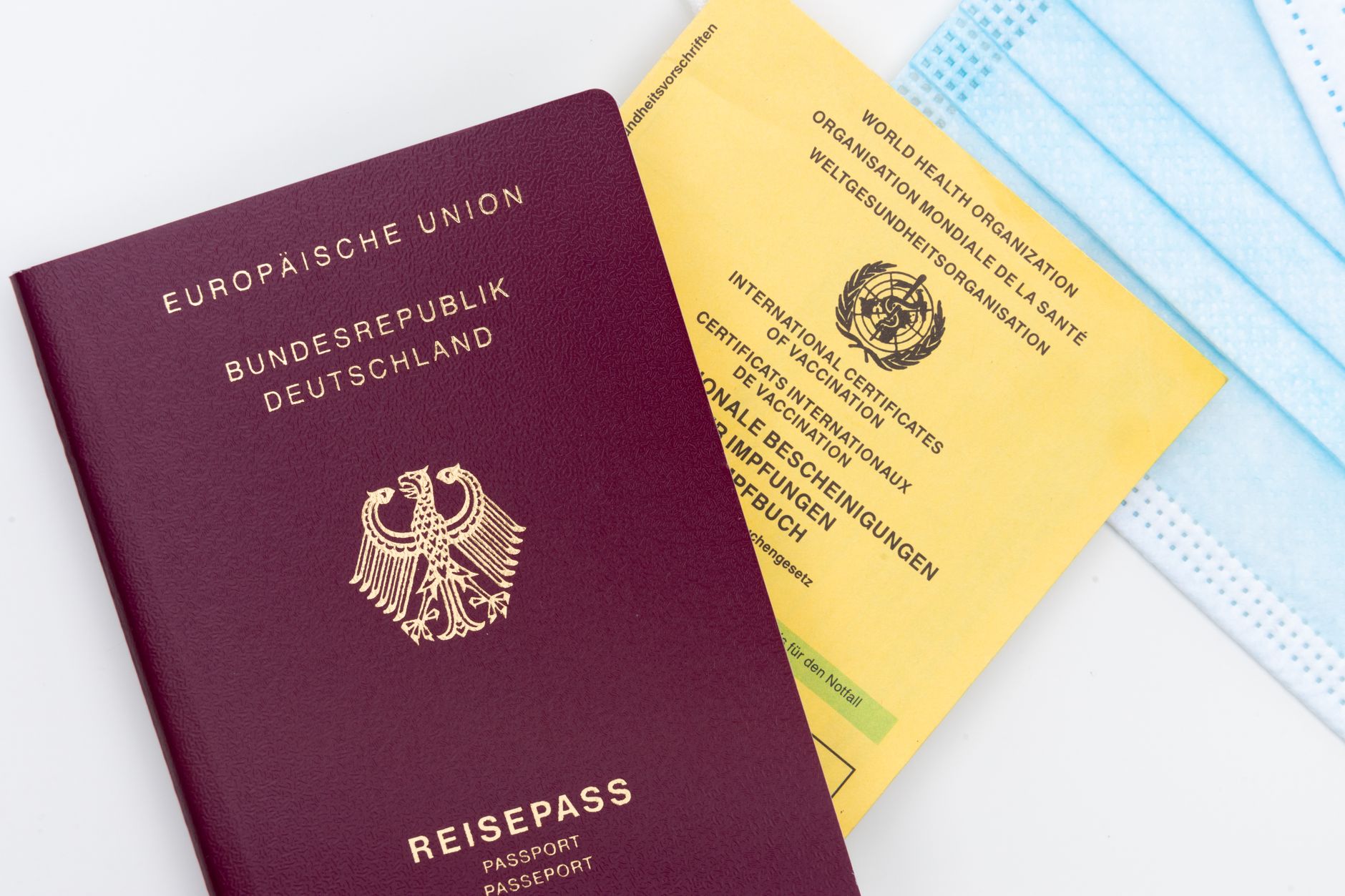
Krankenversicherung (health insurance) is not a choice. Since 2009, everyone living in Germany must be insured, and you cannot get your residence permit (Aufenthaltstitel) or register your address (Anmeldung) smoothly without proof of cover. This is the first insurance you sort out — often before you even arrive.
There are two systems:
- Gesetzliche Krankenversicherung (GKV) — statutory/public health insurance. Run by funds like TK, AOK, Barmer or DAK. The contribution is income-based: roughly 14.6% plus a fund-specific supplement (~1.7% in 2026) of your gross salary, split with your employer if you are employed. Employees typically pay around €250–450/month as their half; the fund covers spouses and children at no extra cost. This is the default for most employees.
- Private Krankenversicherung (PKV) — private health insurance. Open to high earners (above the annual threshold, roughly €73,800/year in 2026), the self-employed, and some students. Premiums are based on age and health, not income, so they can be cheaper when you are young but rise steeply later, and each family member pays separately.
If you are a student or a jobseeker on a Chancenkarte (opportunity card) or Sperrkonto-based visa, you will usually start on affordable student or expat cover before switching to full GKV once you are employed. Not sure which system fits you? Our health insurance guide and tool walks through GKV vs PKV for your exact status.
Bottom line: everyone needs this, it is legally required, and it is your day-one priority.
2. Personal liability (Privathaftpflichtversicherung) — the €5 everyone should have
If Krankenversicherung is the law, Privathaftpflichtversicherung (personal liability insurance) is the unwritten rule. Around 8 in 10 households in Germany have it, and for good reason: it covers damage you accidentally cause to other people or their property. Spill coffee on a friend's laptop, break a rented apartment's floor, injure a cyclist while crossing the road — you are personally liable in Germany for the full amount, and claims can run into six figures.
For roughly €3–8 per month (often €40–70 for a whole year) you get cover of €5–50 million. Look for a policy with at least €10 million in cover, that includes Schlüsselverlust (loss of keys — a genuinely expensive problem when a whole building's lock system must be replaced) and Mietsachschäden (damage to your rented flat). Families and couples can usually share one policy.
This is the best value insurance in the country. Buy it right after your health cover.
3. Household contents (Hausratversicherung) — depends on what you own
Hausratversicherung (household contents insurance) pays out if your belongings are stolen, or destroyed by fire, water damage or a burst pipe. It insures the stuff in your home — furniture, electronics, clothes, bikes — usually for a sum based on your flat's size (a common rule of thumb is around €650 per square metre).
Cost is roughly €5–15 per month, more in big cities or if you add bicycle-theft cover (Fahrraddiebstahl). Whether it is worth it is a simple maths question: if a break-in or a burst washing-machine hose would force you to replace everything you own, get it. If you are a student with a laptop, a mattress and not much else, you can happily skip it for now and add it later when you own more. Use our living-cost calculator to see how a policy like this fits alongside rent and other monthly outgoings.
4. Legal expenses (Rechtsschutzversicherung) — optional, but Germany is litigious
Rechtsschutzversicherung (legal expenses insurance) covers lawyer and court costs if you end up in a dispute — with a landlord, an employer, a neighbour, or after a traffic accident. Germany runs on contracts and formal letters, and legal fees are high, so a policy that pays for a lawyer can be reassuring.
It costs around €15–30 per month, usually comes with a modular structure (private, work/Arbeitsrecht, tenancy/Mietrecht, traffic), and — crucially — most policies have a Wartezeit (waiting period) of about three months before they cover new disputes, so you cannot buy it the day a conflict starts. It is genuinely useful if you rent (tenancy disputes are common) or foresee employment friction, but it is not urgent for a fresh arrival. Add it once your life here is settled.
5. Disability / income protection (Berufsunfähigkeitsversicherung) — the long game
Berufsunfähigkeitsversicherung (BU) — occupational disability insurance — pays you a monthly pension if illness or injury stops you from doing your job. The German state safety net for this is thin, so financial advisers routinely call BU the second most important policy after health. It is not something most newcomers buy in month one, but it belongs on your radar.
Cost varies enormously with your age, health and profession — anywhere from €30 to over €100 per month — and the younger and healthier you are when you sign up, the cheaper and easier it is (you must pass a health questionnaire). If you plan a long career in Germany, it is worth getting proper advice once you are financially settled.
The sensible order to buy them
- Krankenversicherung — before or immediately on arrival. Non-negotiable and needed for your visa and Anmeldung.
- Privathaftpflichtversicherung — within your first weeks. Costs less than a coffee subscription and protects against catastrophe.
- Hausratversicherung — once you own things worth replacing.
- Rechtsschutzversicherung — when you are settled, renting long-term, or foresee disputes.
- Berufsunfähigkeitsversicherung — when you commit to a career here and can afford to think long-term.
What you can usually skip at first
Do not let an eager agent bundle you into everything at once. As a newcomer you can typically skip life insurance (unless you have dependents relying on your income), private supplementary dental or hospital cover (nice-to-have, not urgent), pet insurance, mobile-phone insurance and extended-warranty products. Sort the essentials, live a while, then add cover as your life in Germany takes shape. And while you settle in, keep building the one skill that makes every insurance call, contract and letter easier — learning German.
Try this free tool
Sperrkonto Calculator
Your exact blocked-account amount and full visa budget for 2026.
Frequently asked questions
Share with your friends
Was this article helpful?
Comments
Most liked comments appear first.
Log in to join the discussion.
…
Read also
🏦 Banking
Private Health Insurance Aging Reserve (Altersrückstellung) Explained
How Germany's private health insurers build an Altersrückstellung (aging reserve) to slow premium rises in old age — and why it matters when a newcomer weighs GKV against PKV.
2026-08-05

🏦 Banking
Zahnzusatzversicherung: Best Dental Insurance Add-Ons in Germany
German statutory health cover pays only a fixed slice of your dental bill. Here's what a Zahnzusatzversicherung adds, the Wartezeit and Zahnstaffel catches, and how to compare tariffs — with 2026 numbers.
2026-08-05
🏦 Banking
Tierhalterhaftpflicht: Dog Owner Liability Insurance in Germany
If your dog bites someone or causes an accident in Germany, you pay for the damage — often mandatory by law. Here is what Tierhalterhaftpflicht covers, what it costs, and why your normal liability policy won't help.
2026-08-05

🏦 Banking
How to File an Insurance Claim in Germany: Schadensmeldung
A step-by-step guide to filing an insurance claim (Schadensmeldung) in Germany: deadlines, documents, photos, Selbstbeteiligung, rejected claims, and tips for Haftpflicht, Hausrat and Kfz cover.
2026-08-05

🏦 Banking
DKB Girokonto Review: Free Account & Visa Card Tested
An honest, hands-on review of the DKB Girokonto for newcomers to Germany: how to keep it free, the Visa debit card, ATM access, English support, and whether it works when you arrive.
2026-08-05

🏦 Banking
How to Switch German Health Insurance: Step by Step
A clear, 2026 guide to switching your German statutory health insurer (GKV): the 12-month lock-in, the special termination right, timelines and how GKV↔PKV differs.
2026-08-05

🏦 Banking
Künstlersozialkasse (KSK): Health Insurance for Creative Freelancers
The Künstlersozialkasse pays roughly the employer's half of an artist's or writer's social insurance in Germany, cutting a creative freelancer's health, care and pension costs almost in half.
2026-08-05

🏦 Banking
Auslandskrankenversicherung: Travel Health Insurance for Germans
Your German GKV and EHIC only partly cover you abroad and rarely pay for repatriation. Here's how cheap travel health insurance (~€10–20/yr) fills the gap in 2026.
2026-08-05